Through ceramic sculpture, Miller's practice investigates how Black bodies have been positioned within the histories of science and medicine, examining the visual and material processes through which they have been classified, measured, represented, and transformed into sites of knowledge extraction.
Abstraction allows these histories to be approached without returning historical subjects to the visual conditions through which they were objectified. Vessels, architectural forms, fragmented physiognomies, and Afro-diasporic material traditions become alternative structures of remembrance that privilege presence over likeness.
Clay remains central to the practice as a medium that retains the traces of what has acted upon it. Like the human body, it bears the imprint of pressure, intervention and time. These sculptures thus become a material counter-archive in which historical subjects are approached not as objects of study, but as lives whose experiences continue to shape the world around us.
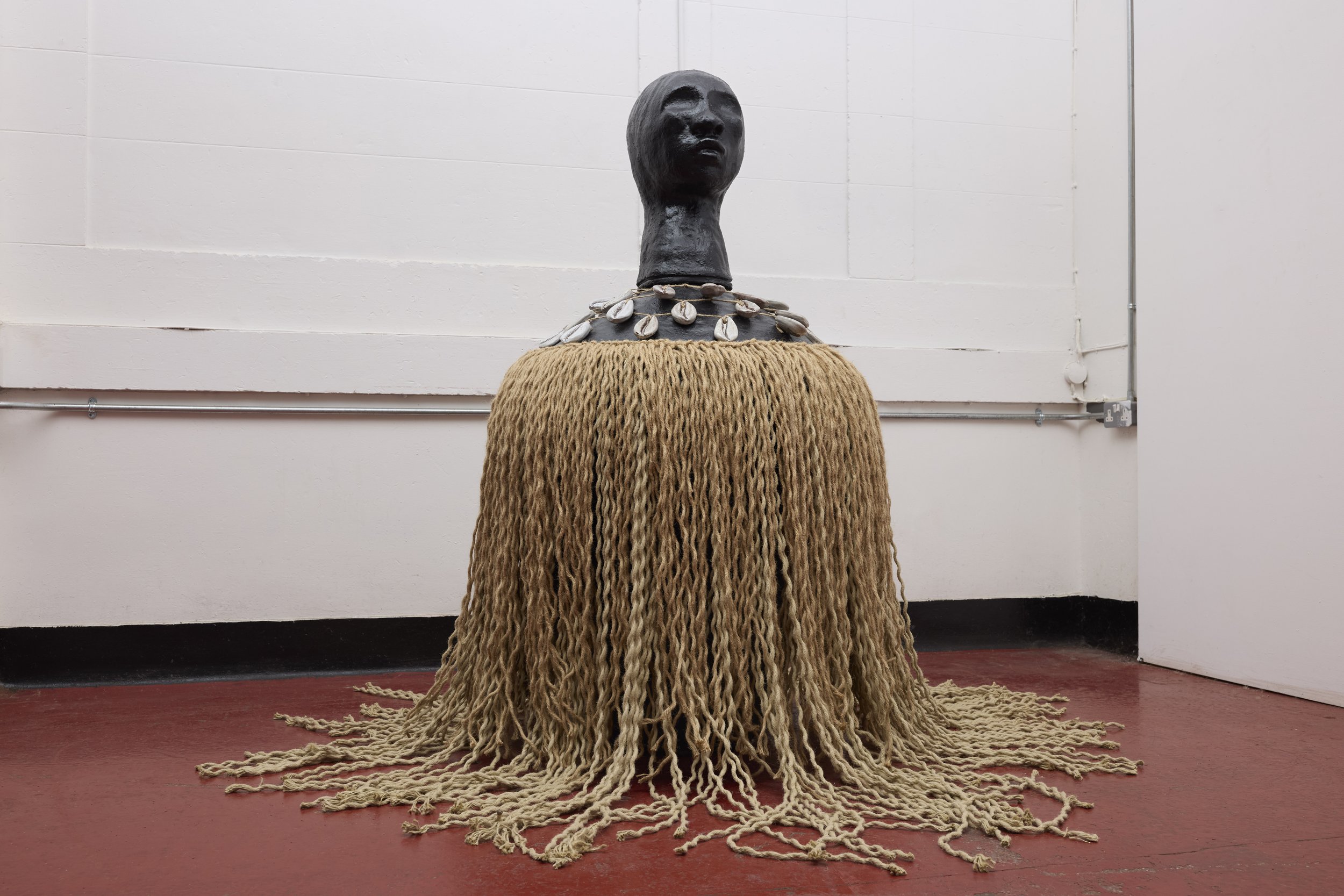
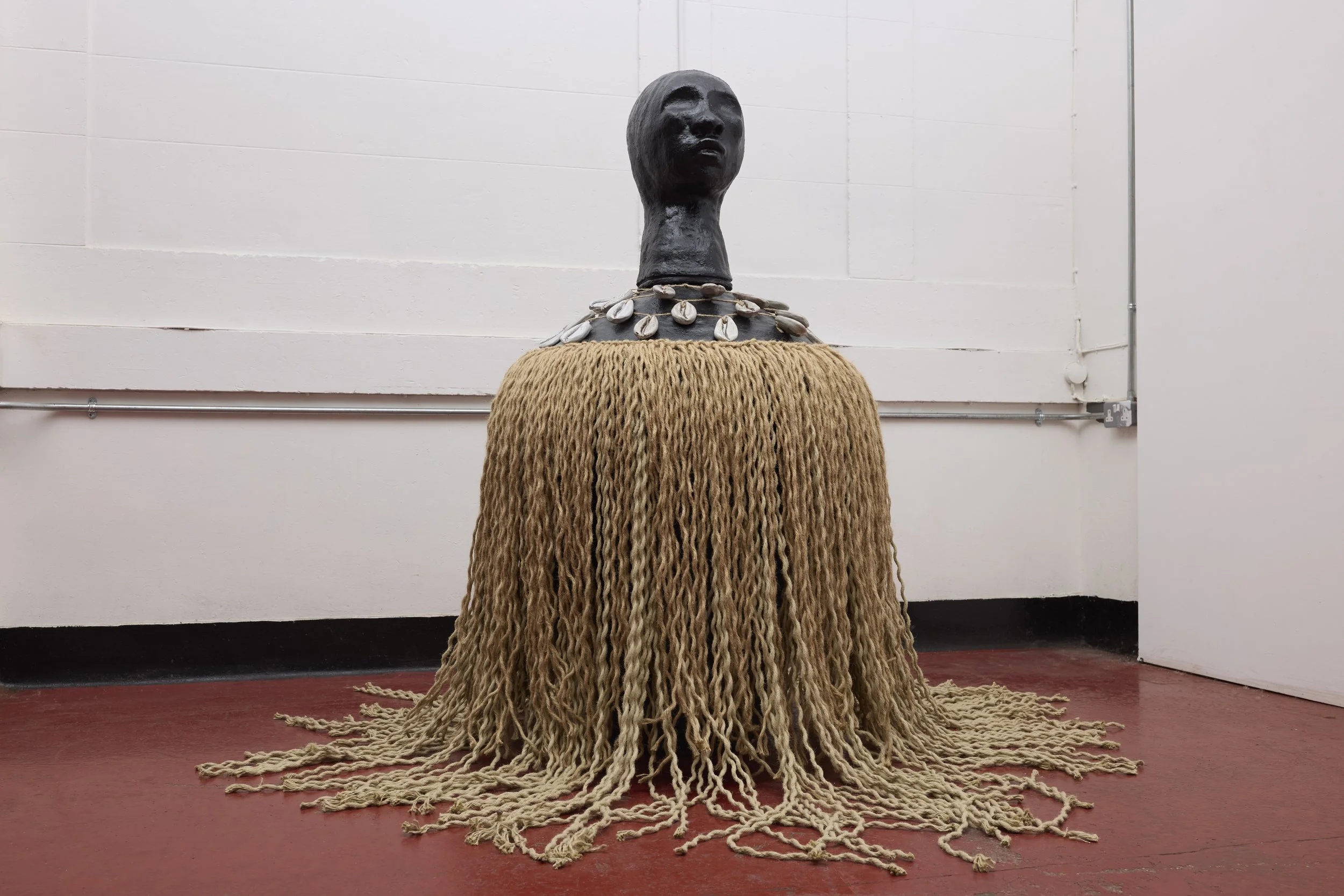
Anarcha, 2026. Stoneware, glazed earthenware, acrylic, sisal, jute. 220 × 220 × 150 cm
Drawing upon the form of the shekere, Anarcha combines a stoneware vessel with hand-sculpted ceramic cowries and intricately knotted sisal and jute fibre. Thirty ceramic cowries mark the procedures Anarcha endured during J. Marion Sims's surgical experimentation, tracing the production of medical knowledge back to the body from which it was extracted. Rather than reconstructing its historical subject directly, the sculpture approaches remembrance through abstraction, transforming a form associated with rhythm, exchange, and community into an act of commemoration.
Song for Sarah, 2026. Stoneware, acrylic. 116 × 86 × 171 cm
Song for Sarah responds to the legacy of Sarah Baartman, whose body became one of the most enduring sites of scientific racism. Constructed through a combination of wheel-thrown and onggi-inspired techniques, the sculpture takes the form of a monumental vessel, using the language of utility and function to consider the ways Baartman's form was made to serve pseudoscientific narratives of racial difference. Seven ceramic cowries encircle the neck of the vessel, while a cowrie-shell head draws upon histories of value, fertility, exchange, and protection, tracing the transformation of Black womanhood into spectacle and evidence.
LB, et al, 2026. Stoneware, glazed earthenware, acrylic, sisal, jute. 58 × 58 × 90 cm
LB, et al recounts the histories of Lucy and Betsy—enslaved women subjected to the surgical experimentation of J. Marion Sims—alongside the countless unnamed Black women whose bodies became sites of medical experimentation and extraction. The sculpted face is framed by an elaborate arrangement of hand-sculpted ceramic cowries that gesture toward dignity, personhood, and cultural continuity. Long associated with value and exchange, the cowries acknowledge the immeasurable value of the knowledge produced through these women's bodies while insisting that they be remembered not as instruments of scientific inquiry, but as lives whose humanity exceeds the histories through which they are most often known.
Concatenation, 2026. Glazed stoneware. 21.5 × 20 × 24 cm | 21.5 x 20 x 25 cm
Concatenation comprises a pair of vessels whose distinct exteriors conceal identical floral interiors. Rooted in the history of John Brown and the experiments conducted by physician Thomas Hamilton, the work confronts attempts to locate anatomical differences between Black and white bodies. The shared floral interiors expose the instability of the distinctions such experimentation sought to prove, suggesting a common humanity beneath surfaces historically made to signify difference.
Untitled, 2026. Glazed stoneware, acrylic, epoxy. 94 × 94 × 83.5 cm
Drawing formally from the architecture of Timbuktu, Untitled is inscribed with both historical diagnoses and contemporary medical technologies. Terms such as Drapetomania, cachexia africana, oximeter, spirometer, and eGFR trace a lineage between nineteenth-century racial pseudoscience and assumptions about biological difference that continue to shape medical practice today. Through this convergence of architecture and language, the sculpture considers how systems of knowledge persist long after the conditions that produced them have changed.
Untitled, 2026. Glazed stoneware. 8 × 5 × 19 cm
Untitled draws upon the wunkirmian sculptures of the Dan peoples, traditionally bestowed upon women recognized for exceptional generosity within their communities. The work invokes this tradition to consider the Black body as an extraordinary site of knowledge production, acknowledging the profound contributions Black subjects have made to the development of medicine and science while insisting that such knowledge was so often produced through coercion, exploitation, and the denial of bodily autonomy.